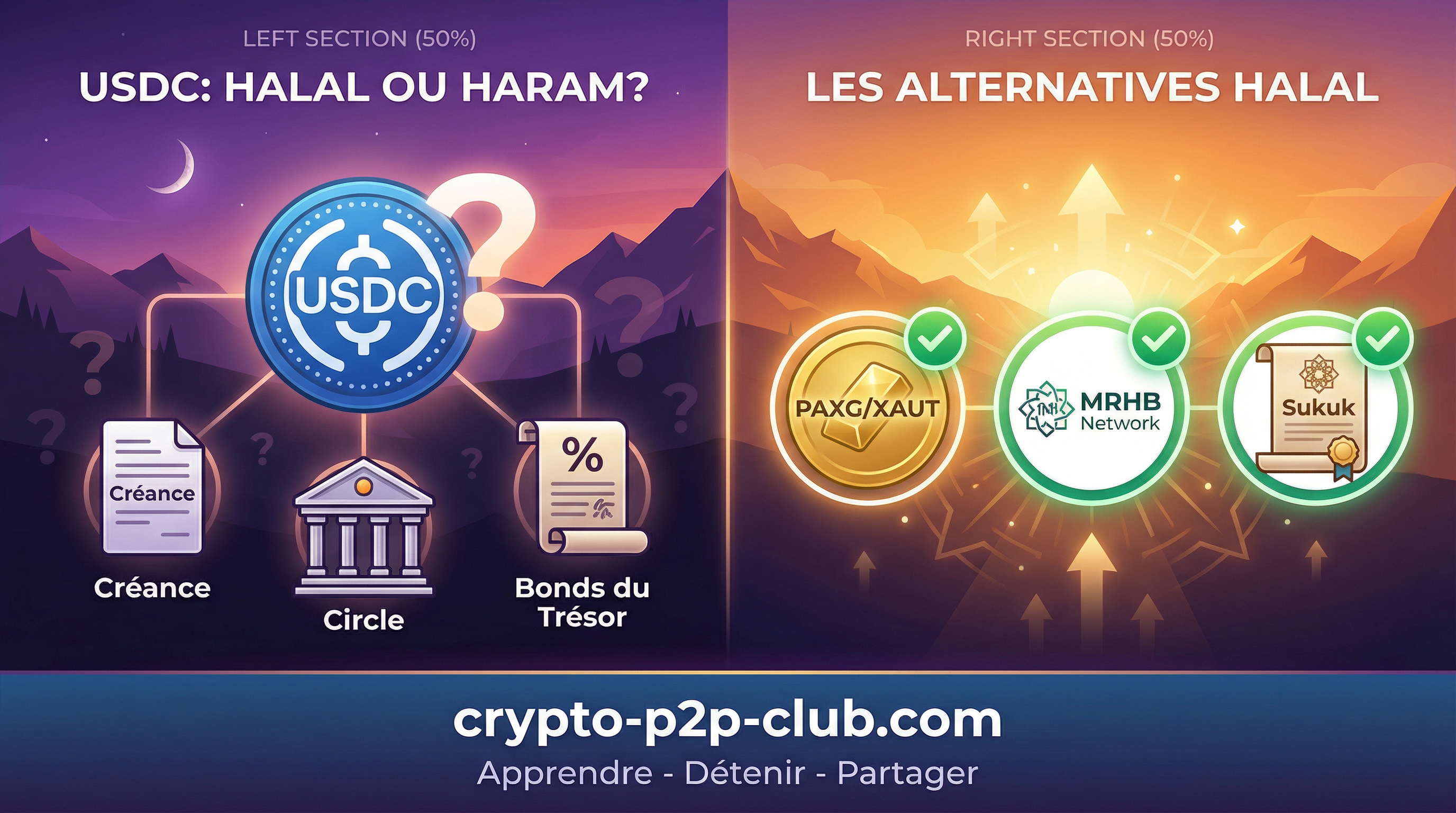
Stablecoins like USDC have become pillars of the crypto ecosystem, but their compliance with the principles of Islamic finance is far from unanimous. Between its debt structure and the technical reality of its reserves, it is essential to understand all aspects to make an informed decision.
The Main Criticism: A Claim, Not Ownership
The most frequent criticism of USDC is its legal structure. When you buy USDC, you do not become the owner of the underlying US dollars. You hold a claim on Circle, the issuing company, which promises you a 1:1 redemption. [1]
In reality, when you buy or hold one of these tokens, you do not legally own any part of the underlying reserve. You are simply holding a digital representation of value that the issuer promises to honor on a 1:1 basis. — (Mufti) Billal Omarjee [2]
This claim-based structure poses several problems from a Shariah perspective:
- Debt Instrument: USDC functions as a debt, which can be seen as a violation of the principles of riba al-fadl (usury of excess) if the settlement is not instantaneous.
- Counterparty Risk: Your capital depends on Circle's solvency.
- Indirect Support for Riba: Circle's reserves are mainly invested in US Treasury bills, which generate interest. This is the principle of i'anat 'ala al-ma'siyah (assisting in sin). [2]
The Technical Reality: A Robust and Transparent Structure
However, a purely technical analysis reveals a structure very similar to that of modern fiat currencies. Here are the facts:
- The Dollar is also a Debt: Since the end of gold convertibility in 1971, the US dollar has itself been a fiat currency, a form of central bank debt not backed by a commodity.
- Reserves Similar to Central Banks: Just as the Saudi Central Bank (SAMA) holds reserves (US Treasury bills, etc.) to back the riyal, Circle relies on reserves to back USDC. [4]
- Managed by a Trusted Third Party: The reserves are not held by Circle, but managed by BlackRock, one of the world's largest asset managers. They consist of highly liquid, short-term assets (cash deposits, short-term Treasury bills, overnight repos) to ensure redemption at any time. [5]
- Transparency and Regulation: Unlike some competitors, USDC is regulated in the United States. Its reserves are independently audited and the reports are public, offering a high level of transparency. [6]
| Aspect | Shariah Point of View (Criticism) | Technical Point of View (Factualist) |
|---|---|---|
| Nature | Debt instrument (claim) | Similar to fiat dollar (central bank debt) |
| Reserves | Invested in riba-based instruments | Short-term liquid assets, managed by BlackRock, publicly audited |
| Risk | Counterparty risk (Circle) | Regulated and transparent risk, similar to banking risk |
Conclusion: Between Necessity and the Quest for Sovereignty
So, is USDC halal or haram? The answer is not binary. On the one hand, its debt structure and indirect link to riba are problematic. On the other hand, its technical robustness, transparency, and similarity to the currencies we all use invite nuance.
At Crypto P2P Club, our position remains one of prudence and education. We tolerate its use out of necessity for transactions, but we formally advise against using it in yield-generating products.
This complexity is a call to action: it is crucial to support truly Shariah-compliant alternatives, such as stablecoins backed by tangible assets (gold) or projects like MRHB.Network or Takadao. [7]
Ultimately, the decision is yours. The important thing is to make it with full knowledge, understanding both the religious criticisms and the technical realities. This is the very foundation of financial sovereignty.
References
[1] Sharlife.my. "USDC (USD Coin) Halal or Haram?". Accessed January 9, 2026. https://sharlife.my/stablecoin/USDC
[2] Omarjee, Billal. "Are Stablecoins Halal? Understanding the Structures Behind the Stability". LinkedIn. July 3, 2025. https://www.linkedin.com/pulse/stablecoins-halal-understanding-structures-behind-omarjee-ywwue
[3] Agio Ratings. "Credit Risk Assessment of Circle (USDC Issuer)". Accessed January 9, 2026. https://www.agioratings.io/insights/credit-risk-assessment-circle-issuer-usdc
[4] Saudi Central Bank. "Monthly Statistics". Accessed January 10, 2026.
[5] BlackRock. "Circle Reserve Fund". Accessed January 10, 2026. https://www.blackrock.com/cash/en-us/products/329365/circle-reserve-fund
[6] Circle. "About USDC". Accessed January 10, 2026. https://www.circle.com/usdc
[7] MRHB Network. "Trusted wallet for the halal Web3 ecosystem". Consulté le 9 janvier 2026. https://mrhb.network/
[8] Takadao. "Empoowering Communities with Decentralized Protection". Consulté le 9 janvier 2026. [https://takadao.io/