Disclaimer: This article is for educational purposes only and does not constitute investment advice. Investing in cryptocurrencies involves high risks.
An Economy on its Knees
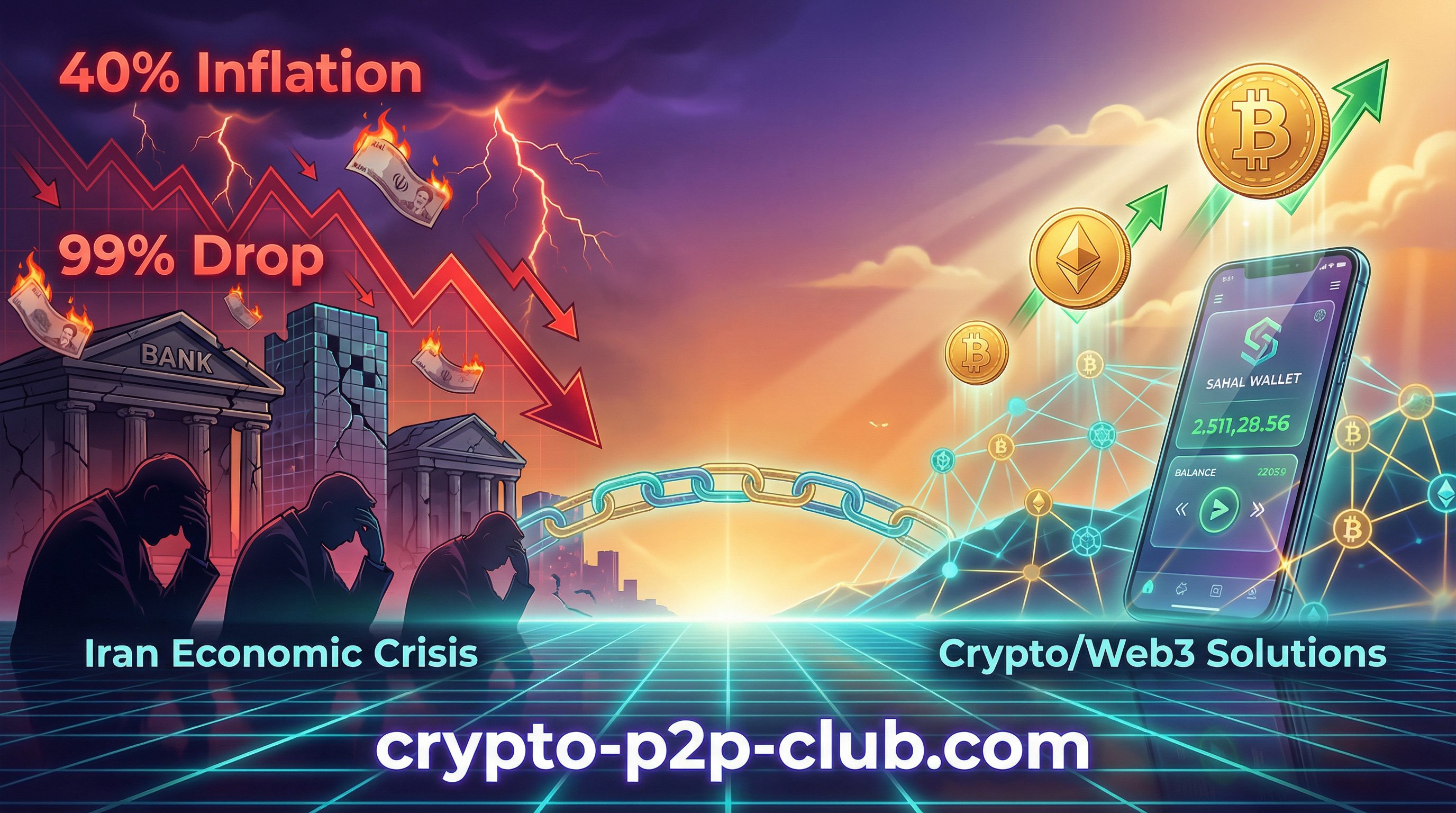
The situation in Iran has reached a critical point. The country is facing one of the most severe economic crises in its recent history, marked by a historic collapse of its national currency, rampant inflation, and widespread social unrest [1]. With the Iranian rial having lost over 99% of its value, reaching exchange rates of 1.5 million rials to one US dollar, a question emerges: how can citizens protect their savings and purchasing power in the face of such a disaster?
In this context, cryptocurrencies and Web3 technologies, often perceived as complex and volatile, appear to some as a genuine lifeline. This article explores the Iranian situation and analyzes how decentralized solutions can offer an alternative to the collapse of a traditional financial system.
The Roots of a Deep Crisis
To understand the appeal of cryptocurrencies in Iran, one must grasp the scale of the crisis. According to analysis from several international media outlets, a combination of factors has created a perfect storm [1]:
| Key Factor | Description |
|---|---|
| International Sanctions | They limit Iran's access to global financial markets and its foreign exchange reserves, strangling the economy. |
| Budget Deficits | Chronic deficits, often financed by money creation (the "printing press"), which directly fuels inflation. |
| Loss of Confidence | A widespread distrust among the population in the government's ability to stabilize the economy and its currency. |
| Geopolitical Tensions | They discourage foreign investment and cause massive capital flight, worsening the currency shortage. |
The result is an annual inflation rate exceeding 40%, making basic necessities like bread, rice, or medicine unaffordable for a large part of the population. It is in this climate of economic despair that many Iranians are turning to alternatives.
Crypto: A Parallel Financial System?
Faced with a banking system paralyzed by sanctions and a currency that is almost worthless, cryptocurrencies offer concrete solutions to the daily problems of Iranians.
1. Stablecoins: A Hedge Against Inflation
The first and most obvious utility is protection against devaluation. Stablecoins like USDC or USDT, which are pegged to the US dollar, allow people to preserve the value of their savings. For an Iranian, holding stablecoins is like holding dollars, but without needing a US bank account and without the risk of direct confiscation.
2. Bitcoin: The Decentralized Store of Value
Beyond stablecoins, Bitcoin (BTC) plays the role of an ultimate store of value, often compared to digital gold. Its decentralized nature makes it resistant to censorship and control by any government. For those looking to protect their wealth over the long term, Bitcoin represents an insurance policy against the total collapse of the local financial system.
3. Decentralized Finance (DeFi): Access to Financial Services
International sanctions exclude Iranian citizens from the global financial system. DeFi gives them back this access. Through decentralized platforms, an Iranian can theoretically:
- Save and earn yield on their stablecoins.
- Borrow by using their crypto as collateral.
- Trade assets without going through a bank or broker.
4. Non-Custodial Wallets: Reclaiming Sovereignty
One of the fundamental principles of Web3 is "Not your keys, not your coins." By using non-custodial wallets like Sahal Wallet, users hold their own private keys. This means they have full and absolute control over their funds. No bank, no government can freeze or seize their assets without their consent. This is a radical paradigm shift for citizens accustomed to the arbitrary nature of political and financial power.
Conclusion: A Glimmer of Hope, But Not Without Risks
The Iranian crisis is a tragic case study that illustrates the fragility of fiat currencies and the importance of financial sovereignty. Cryptocurrencies and Web3 are not a magic bullet, and their use comes with its own risks (volatility, technical complexity, security).
However, they provide powerful resilience tools for individuals trapped in a failing economic system. They offer a way out, a means to preserve wealth, bypass restrictions, and participate in a global economy. For millions of people in Iran and other countries in crisis, this alternative is not a speculative choice, but an act of economic survival.
At Crypto P2P Club, our mission is to educate our community on these issues. Understanding how these tools work is the first step to regaining control of one's financial future.
References
[1] IUX. (2026, January 14). Inside Iran’s Economic Meltdown: Currency Collapse, Inflation, and Social Unrest. Investing.com. Retrieved January 14, 2026, from https://www.investing.com/analysis/inside-irans-economic-meltdown-currency-collapse-inflation-and-social-unrest-200673212