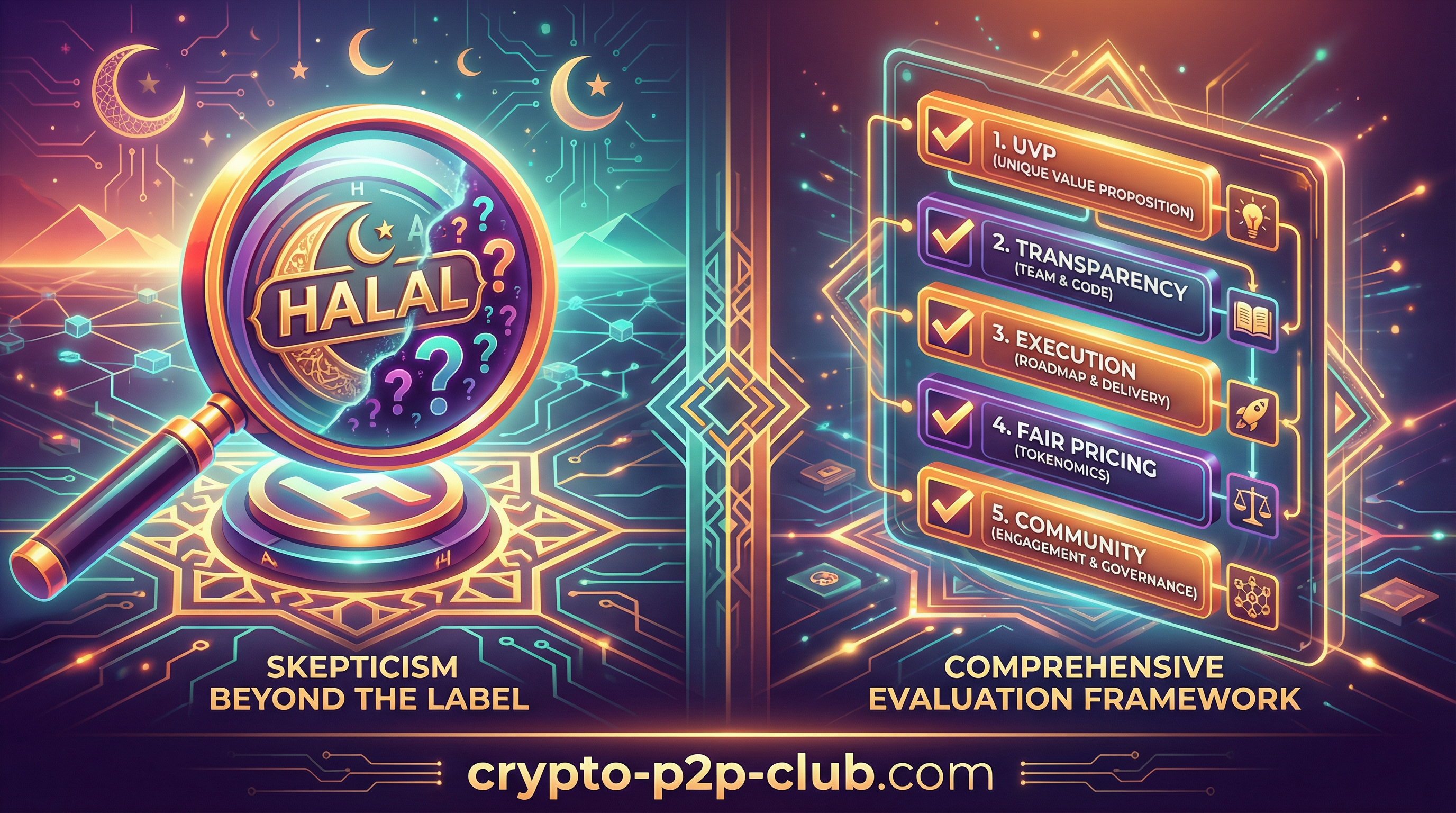
A recent discussion with a member of our community highlighted a fundamental concern that resonates with many Muslim investors: the question of the real utility of crypto projects that present themselves under the "halal" banner. This frank and constructive conversation inspired us to delve deeper into this crucial topic.
"I don't understand the Islamic Coin project. Is it an ecosystem for Muslims? But ultimately, Bitcoin already exists, so it's essentially the same thing. There are plenty of crypto projects that address this need, so why reinvent the wheel and not simply use the traditional halal system? Why go through Islamic Coin? That's something I just can't grasp."
This quote perfectly summarizes the growing skepticism towards projects whose main marketing argument is their ethical compliance, without always demonstrating tangible added value. Let's analyze the points raised together to learn to look beyond the label.
The Ethical Marketing Trap
The Islamic finance market is booming, and the crypto ecosystem is no exception. Projects like Islamic Coin or MRHB DeFi have emerged with the promise of providing Shariah-compliant financial solutions. The intention is commendable. However, as our member points out, the "halal" label should not be a veil that masks a lack of substance.
A project that simply says "we are for Muslims" without explaining how it solves a specific problem, or how it is better than existing alternatives (including Bitcoin or Ethereum, which are neutral by nature), risks being just an empty shell. The question is not whether a project is for Muslims, but whether it is useful for them.
The 5 Questions to Ask Before Investing
When faced with a new project, especially a low-cap startup, enthusiasm must give way to critical analysis. Here are five questions inspired by our discussion:
-
What is the Unique Value Proposition (UVP)? Beyond the "halal" label, what concrete problem does the project solve? If the only answer is "to be a halal alternative," that's a red flag. MRHB offers a shariah-scanner, which is a clear UVP. But is it enough to support an entire ecosystem?
-
Is there full transparency? Our community member pointed out the lack of a clear roadmap and the feeling that some projects operate "on a whim." A team that is not transparent about its goals, progress, and failures is a team that does not respect its investors.
-
Is the execution up to par with the idea? "The idea is good but the execution is bad," he said. This is the graveyard of many startups. A promising whitepaper is worthless if the team lacks the technical and strategic ability to implement it. "Gadget" or unfinished products are warning signs.
-
Is the business model fair? The criticism of halal investment solutions that charge exorbitant fees (8% on gold at Inaya) is relevant. A project that claims to be ethical must also be so in its cost structure. If a decentralized and cheaper alternative exists, why pay more?
-
Is the community healthy and critical? A community where any criticism is taken badly, where members are accused of having conflicts of interest, is not a healthy community. Constructive debate is the engine of improvement. A project that fears it is a project that stagnates.
The Investor's Dilemma: Pioneer or Prudent?
The discussion also highlighted two investor profiles: the "stuntman" ready to lose everything on a fledgling startup, and the "cautious" one who prefers to wait for the project to prove itself. There is no right or wrong approach, but it is essential to know your own risk profile.
Investing in a crypto startup means accepting an extremely high level of Gharar (excessive uncertainty). Doing so without a deep understanding of the project is to turn an investment into a gamble, which is problematic from an ethical point of view.
Conclusion: Towards a More Demanding Community
This conversation reflects a growing maturity within the Muslim crypto community. We are moving from passive acceptance of anything with a "halal" label to a critical demand for value, transparency, and utility.
This is excellent news. It is this demand that will push entrepreneurs to build more robust projects and that will protect investors from marketing mirages. At Crypto P2P Club, we are proud to facilitate these debates and contribute to this collective education.
Let's keep asking the tough questions. Let's keep demanding better. This is how we will build a decentralized finance ecosystem that is truly ethical and useful for everyone.
This article is inspired by a real conversation with a member of the Crypto P2P Club community. His anonymity has been preserved. The opinions expressed in this article are for educational purposes and do not constitute investment advice in any way.