
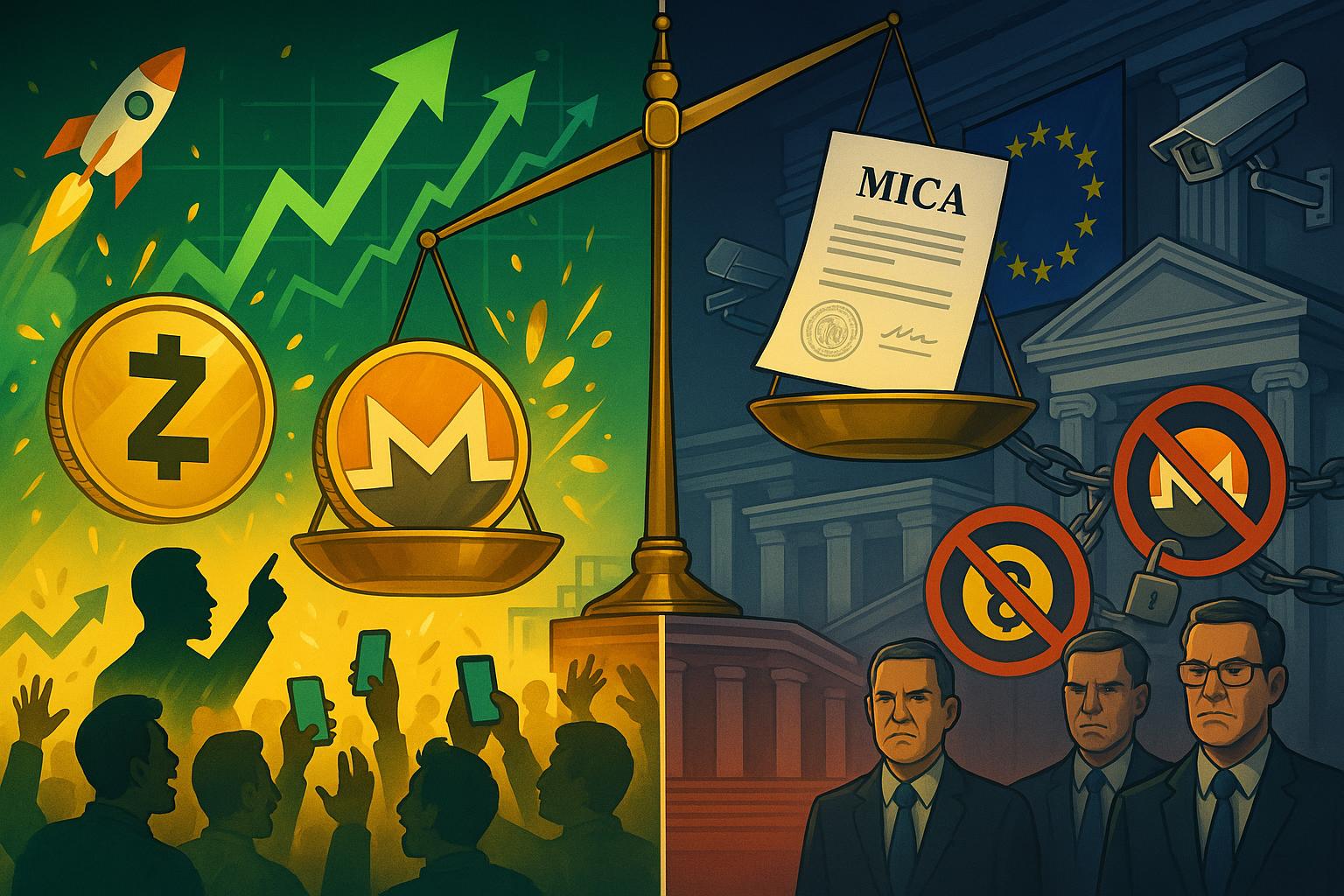
The "privacy coin" fever: between explosive speculation and regulatory pressure
Anatomy of a speculative explosion
Zcash's spectacular rise is not the result of a sudden technological revolution, but rather a "perfect storm" of speculative factors. One of the most powerful catalysts was the intervention of Arthur Hayes, co-founder of BitMEX, who publicly predicted a bright future for Zcash, with long-term price targets reaching $10,000 to $20,000 [1]. This statement, coming from such an influential figure, triggered a wave of FOMO (Fear Of Missing Out), propelling ZEC to heights unseen since 2018.
"ZEC is now my second-largest liquid position after Bitcoin," said Arthur Hayes, adding fuel to the speculative fire and advising ZEC holders to secure their assets in non-custodial wallets [2].
This surge was amplified by rumors of a "halving" and increased accessibility on leveraged trading platforms. However, many analysts warn of a violent correction, noting that technical indicators are in extreme overheating, with the weekly RSI reaching a record level of 94.24 [3].
The regulatory squeeze tightens: MiCA and the end of anonymity?
Ironically, one of the main drivers of this speculation is the threat of a ban. The new European regulation on crypto-asset markets (MiCA) plans to outright ban "privacy coins" on legal exchange platforms by 2027 [4].
The stated goal is to fight money laundering and terrorism financing. The new AML (Anti-Money Laundering) rules will prohibit crypto-asset service providers (CASPs) from offering anonymous accounts or working with cryptocurrencies that enhance anonymity.
| Key MiCA Measure | Impact on Privacy | Deadline |
|---|---|---|
| Privacy coins ban | Platforms will no longer be able to list Zcash, Monero, etc. | 2027 |
| End of anonymous accounts | Mandatory KYC/AML for all platform users | 2027 |
| Direct supervision of 40 CASPs | Enhanced surveillance by the European Anti-Money Laundering Authority (AMLA) | July 2027 |
This regulatory approach creates a paradoxical situation: by wanting to eliminate a risk, regulators are fueling unbridled speculation on the assets they seek to ban, pushing users toward unregulated, potentially less safe platforms.
The ethical debate: is financial privacy a right?
Beyond market volatility, this situation raises a fundamental ethical question. In an increasingly digital and surveilled world, is the privacy of our financial transactions a fundamental right to preserve, just like freedom of expression or correspondence secrecy?
Regulators argue that anonymity facilitates criminal activities. This is a valid argument, but it should not obscure the other side of the coin. Financial privacy is also an essential tool for:
- Protecting political dissidents and journalists in authoritarian regimes.
- Preserving businesses from industrial espionage.
- Allowing ordinary citizens to protect themselves against mass surveillance and commercial profiling.
At Crypto P2P Club, we defend a vision where privacy is not synonymous with criminality. It is a tool of freedom that, like any tool, can be used for good or bad. Banning the technology itself is like throwing the baby out with the bathwater.
Beyond speculation: toward responsible privacy
The current frenzy around Zcash is dangerous because it is disconnected from the real utility of the technology. It attracts speculators seeking quick gains, who will likely be the first to panic and sell in case of a correction.
The true value of "privacy coins" does not lie in their "pump" potential, but in their ability to offer an alternative to an increasingly transparent and controlled financial system. Projects like Zcash, with their optional privacy, offer an interesting compromise. They allow users to choose between transparent transactions (for auditability) and shielded transactions (for privacy), offering flexibility that regulators should consider.
The solution is not prohibition, but education. It is crucial to teach users to master these tools, to understand the challenges of financial sovereignty, and to use privacy responsibly. By regaining control of our own assets, through non-custodial wallets, we can truly benefit from the promise of blockchain.
Conclusion: education as a bulwark
The speculative episode of "privacy coins" is a symptom of the growing tension between the promise of crypto freedom and the desire of states to control. While speculation is an inevitable facet of this market, it should not make us lose sight of the main issue: building a fairer, more open financial system that respects privacy.
Rather than succumbing to regulatory panic or speculative euphoria, the wisest path is that of knowledge. Let us learn, understand, and master these new technologies to make them instruments of freedom and sovereignty, not mere casino tokens.
References
[1] Yahoo Finance. "Arthur Hayes' $10,000 ZEC Call Sparks Crypto-Wide FOMO..." Accessed November 13, 2025. [2] Coingape. "Arthur Hayes Issues Advice To ZEC Holders Amid Push For Crypto Privacy." Accessed November 13, 2025. [3] TradingView / Cointelegraph. "Zcash may see 'violent end' as ZEC price rallies 1,500% in just two months." Accessed November 13, 2025. [4] The Defiant. "EU AML Rules Ban Anonymous Accounts, Privacy Coins." Accessed November 13, 2025.