
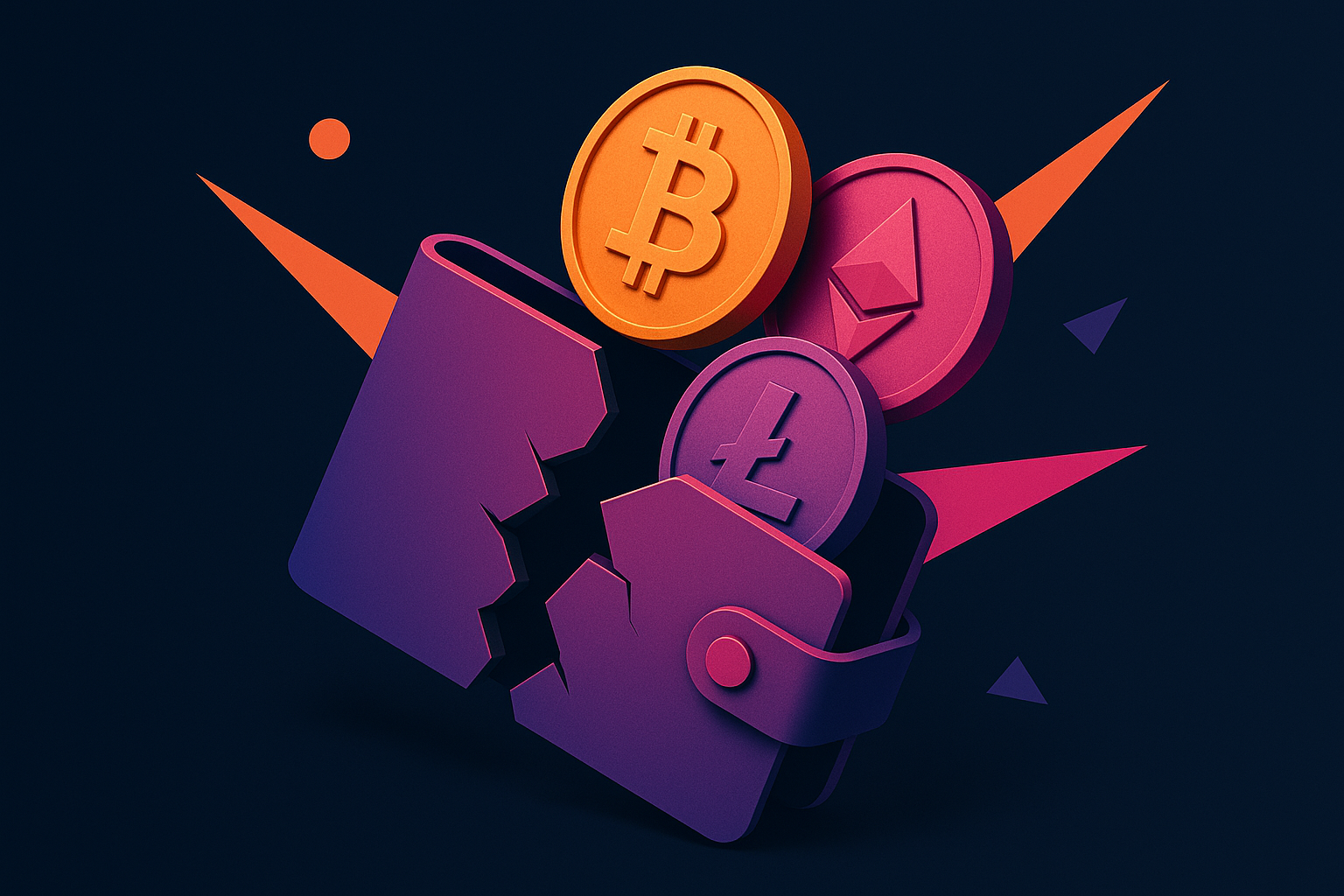
Crypto Security: Why $3 Million Can Disappear With a Click (And How to Protect Yourself)
In 2025, Brandon Larocque, a cautious retiree and cryptocurrency enthusiast, saw his entire retirement vanish with a single click: $3 million in XRP disappeared from his wallet. This tragic loss is not an isolated case. According to Chainalysis, the first half of 2025 saw a historic record in crypto ecosystem crime, with no less than $2.17 billion stolen. This figure exceeds 2022’s losses by 17%, which had until then been the darkest year for cryptocurrency security.
In this article, we will dissect the mechanisms that make your assets vulnerable, understand how a human error can cost millions, and most importantly, provide you with the keys to build your own digital fortress. Because in the decentralized world of crypto, your security is above all a personal responsibility, perfectly aligned with the ethical principles of Islamic finance.
The Invisible Battlefield: Hot Wallet vs. Cold Wallet
To fully grasp the risks facing your cryptocurrencies, you first need to understand the fundamental distinction between two types of digital wallets: hot wallets and cold wallets.
A hot wallet is a wallet permanently connected to the internet. It offers great ease of use, comparable to having your wallet in your pocket for quick purchases. However, this accessibility comes with increased vulnerability: like a physical wallet left unattended on a busy street, it can be easily stolen by malware or hackers.
Conversely, a cold wallet is an offline wallet, isolated from the network. Imagine it as a physical safe, kept in a secure location. This disconnection protects your private keys from the majority of digital attacks, making the cold wallet the ideal solution for secure, long-term storage of your assets.
Anatomy of a Disaster: The $3 Million Mistake
Brandon Larocque’s story tragically illustrates that even the most cautious users can make an irreversible mistake. Owning a hardware cold wallet renowned for its security, Brandon believed he had protected his retirement. Yet, he made a fatal error: he imported the seed phrase from his cold wallet into a hot wallet on his iPad.
The seed phrase, that confidential series of words which grants access to your wallet, is the digital equivalent of the keys to your safe. By importing it into an online environment potentially infected with malware, Brandon exposed his private keys. Malware present on his iPad was then able to capture this sensitive data, allowing hackers to transfer 1.29 million XRP to controlled addresses, erasing all trace of his funds.
This loss is not attributable to a technological flaw, but rather a human error, highlighting that crypto security depends as much on user vigilance as on the robustness of the tools.
A Hostile Ecosystem: Know Your Enemy
The reality of 2025 is clear: crypto crime is reaching new heights. Chainalysis reports that attacks directly targeting personal wallets now represent 23.35% of all thefts, a significant increase shifting the focal point of cyberattacks toward individuals.
Among the most formidable threats are malware and phishing. Malware often disguises itself as browser extensions or legitimate software, such as file converters, to infiltrate wallet interfaces and steal private keys. Additionally, phishing exploits user trust through fake emails, fraudulent support teams, or even deepfakes of influential personalities, with a +1633% surge in such attacks in the first quarter of 2025.
Another lesser-known danger is blind signing, where the user signs a transaction without verifying the details. This practice is akin to signing a blank check and has already caused major losses, such as the $1.4 billion leak on the ByBit exchange in February 2025.

Ethical Responsibility: The Principle of Amanah (Trust)
Beyond technical aspects, cryptocurrency security is rooted in a profound ethical dimension. The Islamic concept of Amanah, meaning trust and responsibility, teaches us that safeguarding assets, including digital ones, is a sacred duty. Being the custodian of your digital assets implies a moral obligation to protect them diligently, as ignorance or negligence do not excuse loss.
Hikmah, or wisdom, invites us to educate ourselves and act prudently, to understand risks before taking action. The contemporary proverb "In crypto, you are your own bank" finds its full meaning here: managing your funds is exercising an ethical responsibility, ensuring the integrity of your holdings through knowledge and caution.

Your Personal Fortress: Practical Security Guide
Building strong security involves simple yet rigorous actions. Here is a practical checklist to protect your cryptocurrencies:
-
Seed Phrase: Never store it online or as a photo. Prefer a durable physical medium, ideally metal, resistant to fire and water.
-
Hardware Wallet: Use a reputable hardware wallet with a secure chip and a screen to verify every transaction.
-
Verification: Carefully check addresses and amounts displayed on the wallet’s screen before approving any operation.
-
Segregation: Separate your funds into multiple wallets according to their use (trading, savings, emergency fund) to limit risks.
-
Updates: Keep your wallet’s firmware and associated software up to date to benefit from the latest protections.
These best practices are the bulwark against attacks proliferating in a complex and hostile digital environment.
Conclusion: The Triptych of Digital Sovereignty
Cryptocurrency security rests on an essential triptych: Knowledge, Tools, and Vigilance. Knowledge means education and understanding of risks. Tools refer to hardware wallets and sound technical practices. Vigilance is the constant attention paid to every digital interaction.
Security is not optional nor a mere precaution; it is a skill to be cultivated and a fundamental ethical responsibility. Mastering these three pillars preserves not only your digital wealth but also your financial sovereignty and the trust you place in this revolutionary universe.
References
- Chainalysis - 2025 Crypto Crime Mid-year Update (July 17, 2025)
- Ledger Academy - Crypto Wallet Security Checklist 2025 (November 7, 2025)
- Hacken, Crypto Losses 2025 (cited by Ledger Academy)
- CertiK - Wallet Compromises and Phishing (May 2025)
- Right-Hand - Deepfake Vishing Attacks 2025
- AIMS Education - What is Amanah in Islam? https://aims.education/what-is-amanah-in-islam/ (November 4, 2025)
- Halal Times - Understanding Amanah https://www.halaltimes.com/understanding-amanah/ (June 8, 2023)
- Etiik Conseils - Riba, Gharar, Maysir: The Fundamental Prohibitions Explained Simply https://etiik-conseils.fr/riba-gharar-maysir-les-interdits-fondamentaux-expliques-simplement/ (March 27, 2025)