
Crypto Regulation in the United States: The End of the Decentralized Dream or a Necessary Evolution?
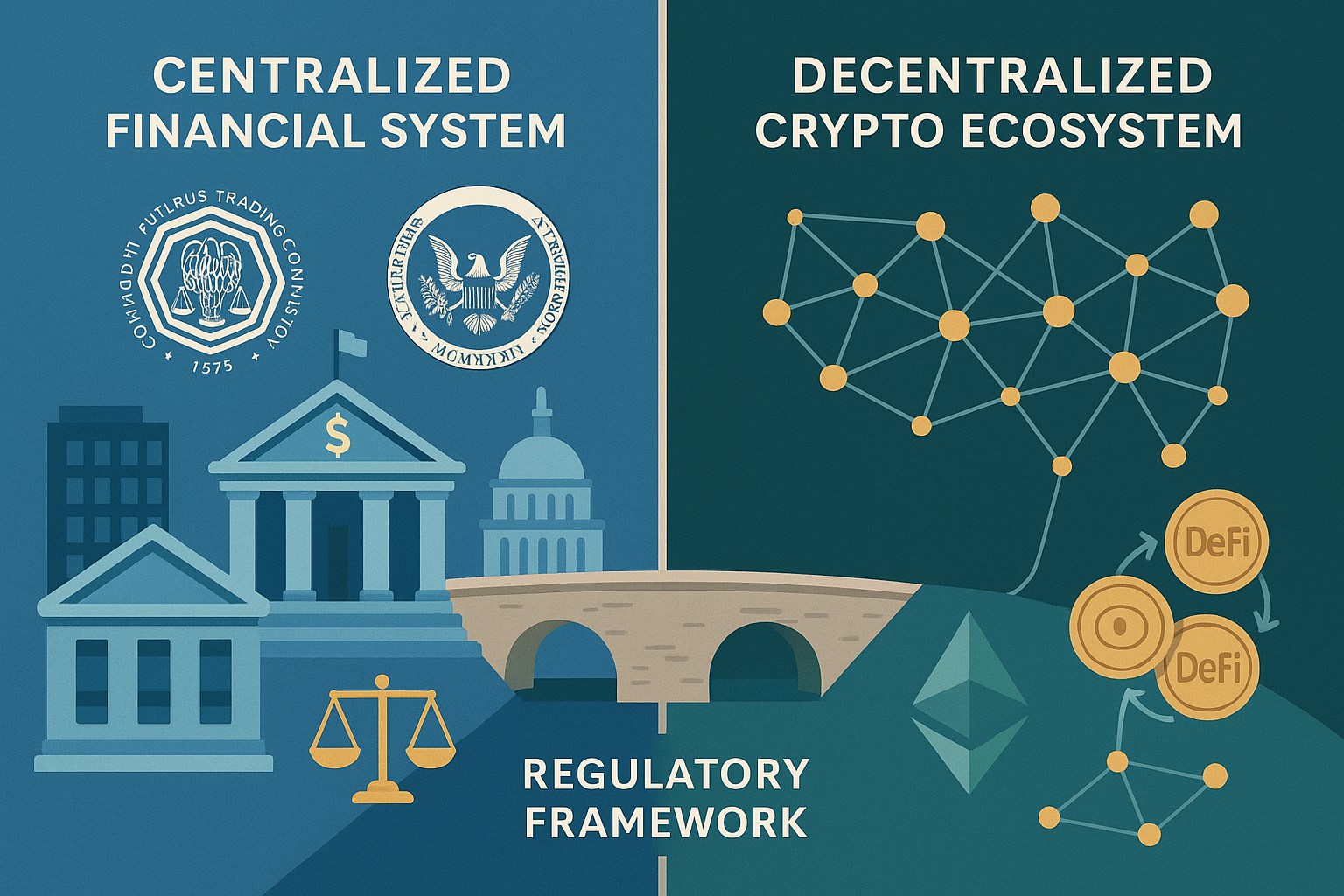
On November 11, 2025, the US Senate unveiled a bipartisan bill that could redefine the future of cryptocurrencies. This text, sponsored by the Agriculture Committee, aims to create a clear regulatory framework for digital assets. While we recently explored the challenges of clearer crypto regulation for the ethical investor [https://crypto-p2p-club.com/blog/vers-une-regulation-crypto-plus-claire-une-analyse-ethique-pour-linvestisseur-musulman](Towards Clearer Crypto Regulation: An Ethical Analysis for the Muslim Investor), this new initiative raises an even more fundamental question: by seeking to reassure institutional investors, does this initiative risk betraying the ideal of decentralization that gave birth to Bitcoin?
Satoshi Nakamoto's original promise was that of a peer-to-peer financial system, free from state control. Sixteen years later, the crypto industry finds itself at a crossroads. To attract billions of dollars from pension funds and asset managers, it must prove its worth and comply with the demands of regulators. This paradox is at the heart of the new US bill, which may well mark the end of cryptocurrency's rebellious adolescence, ushering it into a more mature, but also more conventional, adulthood.
What Does This Bill Contain?
This discussion draft, the result of a collaboration between Republicans and Democrats, proposes several major changes for the crypto ecosystem in the United States. It is a significant step forward that could end years of legal uncertainty.
| Key Point | Description | Implication |
|---|---|---|
| Crypto Status | Bitcoin and Ethereum would be classified as "digital commodities". | They would fall under the jurisdiction of the CFTC, the federal agency that regulates commodities, and not the SEC, the stock market watchdog. |
| CFTC Power | The CFTC would see its power to regulate the crypto industry strengthened. | This would end the turf war between the CFTC and the SEC, offering more clarity to businesses. |
| Fund Segregation | Exchanges would have to separate their different activities (brokerage, custody, trading). | No more "all-in-one" models like FTX. This measure aims to avoid conflicts of interest and protect client funds. |
| Listing Standards | Exchanges could only list assets that are not readily susceptible to manipulation. | A big step towards investor protection and reducing "rug pull" scams. |
"This is the most consequential roadmap for how an institution is going to integrate digital assets into their business," Cody Carbone, CEO of the Digital Chamber trade association, told CNBC [1].
Ethics at the Heart of the Debate: Is Centralization Inevitable?
For the Crypto P2P Club, which advocates a vision of finance based on digital sovereignty and financial freedom, this bill raises fundamental ethical questions. By seeking to legitimize the industry, are we not risking recreating the centralized structures that Bitcoin sought to abolish?
The Specter of Two-Tier Crypto
By classifying Bitcoin and Ethereum as "commodities," the bill opens the doors to institutional portfolios. But what about the thousands of other tokens? We are potentially heading towards a bifurcated market: on one side, a handful of "respectable" and regulated assets, accessible to large investors; on the other, a digital Wild West for more innovative and decentralized projects. This distinction could stifle innovation and create a barrier to entry for small players.
DeFi, the Great Forgotten?
The bill remains very vague on the regulation of decentralized finance (DeFi). Yet, it is precisely in DeFi that the future of digital sovereignty is being played out. By focusing on centralized actors (exchanges), regulators are currently ignoring the core of the blockchain revolution. Is this a temporary oversight or a strategy to leave DeFi in a gray area, too risky for traditional investors?
"It’s critical that legislation distinguishes between centralized intermediaries and decentralized systems," emphasized Keith Grossman, President of Moonpay [1].
Conclusion: A Necessary Compromise for the Future?
This US bill is a mirror held up to the crypto industry. It reflects its quest for legitimacy and its desire to attract institutional capital. For early adopters, this may feel like a betrayal. For pragmatists, it is an inevitable step towards mass adoption.
At Crypto P2P Club, we believe the answer lies in our triptych: Learn, Hold, Share.
- Learn: It is crucial to understand the implications of this regulation. It offers welcome protection to investors but could limit the scope of the decentralized revolution.
- Hold: The best response to centralization remains self-custody. Using non-custodial wallets like Sahal Wallet, where you alone control your private keys, is more than ever an act of digital sovereignty.
- Share: The debate is just beginning. It is our responsibility, as a community, to participate in the discussion and advocate for regulation that protects without stifling, that frames without centralizing.
This bill is not the end of the decentralized dream, but it forces us to ask what kind of dream we want to build. A fully regulated and sanitized ecosystem, or a space where innovation can still thrive, even if it means accepting some risk? The future of crypto will be played out in the community's ability to find a balance between these two visions.
References
[1] CNBC, "Five takeaways from the release of a much-awaited crypto market structure bill", November 11, 2025. https://www.cnbc.com/2025/11/11/five-takeaways-from-the-release-of-a-much-awaited-crypto-market-structure-bill.html